by Jorge Javier Peña Tovar
There was a time when photographs didn’t appear immediately after you took them. You had to wait for them.
Younger photographers grew up watching images appear on the camera’s back screen or on a phone. We grew up differently. We took a photograph and then lived with the uncertainty. We didn’t know if the focus was right. We didn’t know whether the exposure was correct. We didn’t know if that expression that seemed perfect had been caught on film or had escaped forever.
Photography was a small act of faith.
More than thirty years ago, my wife and I were newlyweds. We were still in that stage of life where every road looks like an invitation and every map looks like a promise. We decided to travel to Margarita Island.
During those days, I carried with me an old Minolta that had belonged to my mother. I like to think that some cameras accumulate stories the way family albums do. They pass from hand to hand carrying memories that don’t entirely belong to them. That camera already had a life before it reached mine. What I didn’t know was that I was about to add to it a story that would stay with me for decades.
I shoot everything. The trip, the landscapes, the small things that seem important when you’re young and in love. And La Restinga Lagoon. I remember the mangroves, the heat, the smell of the water, the sound of the boat engines crossing the lagoon. I remember the feeling of living a moment that deserved to be kept.
I had five rolls of film. Five complete rolls, 36 exposures each. By today’s standards, that doesn’t sound like much. For those of us who grew up counting shots, it was almost a small fortune of future memories.
When we returned, I took the rolls to the lab. Back then the story didn’t end when you pressed the shutter. There was a second stage. The wait. The developing. The excitement of opening the envelope and discovering what had come back from the trip and what had been lost along the way. We asked for the express service. Then we went for coffee, ice cream, killing time with the restless patience of someone who knows something important is happening without them.
But Venezuela had other plans.
While my five rolls were inside the developing machine, the power went out. One of many. A moment of darkness. A simple blackout. And without my knowing it yet, nearly two hundred photographs had just disappeared forever.
When I returned to the lab and they handed me the envelope, I understood immediately that something had gone wrong. It was too light. Too quiet. Not the weight of five developed rolls but of a story left unfinished.
The blackout had interrupted the process, and most of the images were gone.
Out of five complete rolls, only four photographs survived.
Four.
And only two of them were from La Restinga.

The photographs that dissapear
Everything else disappeared. The landscapes, the routes, the everyday moments. The conversations nobody photographed because they seemed too ordinary to deserve a photograph. The small scenes you assume you’ll always remember. All of it was trapped in a darkness far more permanent than the blackout.
For a long time I thought what I had lost were some shoots. That seems logical for a photographer. But the years have a very particular way of correcting our hasty conclusions.
With time I understood that images weren’t really what I missed.
I missed the possibility of looking back at that trip through the eyes of the person I was then. I missed discovering details I surely forgot. A shadow. A glance. Some gesture of my wife’s that went unnoticed in that moment and that thirty years later would have meant the world.
Because that is one of the secret functions of photographs. They don’t only preserve what we remember. They preserve what we will forget.
And maybe that’s why losing them hurt so much. Not because they were technically important. It hurt because they were irreplaceable. The couple that appears in those images no longer exists. The newlyweds who walked through those mangroves disappeared a long time ago. The island is still there. The lagoon is still there. Even two of those photographs are still here. But the people who inhabited them belong now to another time, another body, another soul.
Over the years, something unexpected happened.
The photographs disappeared. But the story remained.
I kept remembering the trip. I kept remembering the lagoon. I kept remembering the heat. I kept remembering the feeling of walking alongside the woman I had just married. The photographs were gone. The memory wasn’t. At least not entirely.
And it was then that I understood something I had never considered.
Maybe photographs don’t preserve memories. Maybe they preserve the doors that lead to them.
Because memory never works alone. Memory reconstructs. It fills in empty spaces. It fills silences. It joins scattered fragments. A photograph doesn’t contain a complete story. It contains clues, fragments, small hints. And then the observer does the rest.
The photograph provides the bricks. Memory builds the house. And sometimes it builds entire rooms using nothing but absence.
Every now and then La Restinga would return. Sometimes as a memory. Sometimes as a question. And other times as a ghost photograph: one of those images we never saw but that, for some reason, we remain capable of imagining with a precision we haven’t earned.
And then I understood something even stranger.
The photographs that disappeared had an advantage the survivors could never have. They were perfect. Real photographs always have flaws. A shadow out of place. An awkward gesture. A crooked horizon. Something we could have done better. But the photographs we never got to see inhabit a different territory. They don’t exist on paper or in a file. They exist only in memory. And there the light is perfect. The composition is perfect. The youth is perfect.
Of course none of those photographs would have actually been like that. But that no longer matters. Because they stopped belonging to photography and began to belong to the imagination.
The only truly perfect photographs are the ones we never got to see.
The negatives disappeared. The images are gone. The blackout won that battle. No elegant reflection, no metaphor, and no dose of nostalgia can change that fact.
But time has a curious way of changing the questions.
Over the years, I stopped asking myself what I had lost. I started asking what had survived.
The story survived. The lagoon survived. The memory of the heat and the sound of the water through the mangroves survived. My mother’s old Minolta survived. Four photographs survived. And, in a way that’s difficult to explain, so did the people we were during those days. Not physically. Not exactly. But they still exist somewhere in memory, young and newly married and completely convinced that life was just beginning.
Sometimes I think the true purpose of photographs was never to preserve the past. The past always ends up escaping. Bodies change. Cities change. People change. Maybe photographs exist to remind us that something happened. To prove to us that a moment was real. That we were once there. That we once loved. That we once were who we were.
For years I believed the blackout had taken those photographs from me.
Today I believe it also left me something in return.
It left me a story. It left me a question. It left me a different way of understanding memory. And it left me the certainty that some images survive even when they disappear.
Because thirty years later those photographs are still doing what photographs are supposed to do. They keep taking me back to Margarita, to La Restinga. I can still hear the water through the mangroves. I still find myself face to face with those two newlyweds who believed life was just beginning.
Not bad for photographs that never got developed.
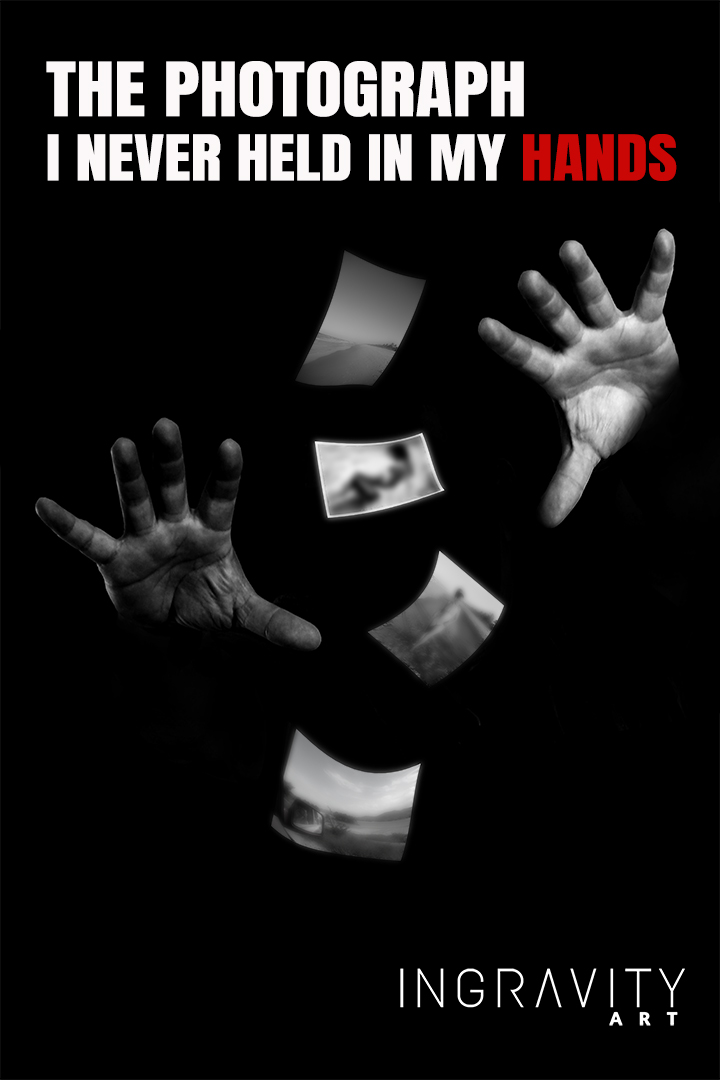
In the end, the most valuable photograph from that trip never made it into my hands, but it lives on in my memory.
And that, fortunately, survived the blackout.
You can read more in Explore the Journal
If you read Spanish, you’ll find more of these ideas at Háblame de Fotos.